

SCHOLARSHIP APPLICATION: (Deadline: APRIL 30th, 2027)
Please ensure all fields are filled in completely.To view previous winner: Click Here
(IF YOU HAVE ANY QUESTIONS, PLEASE EMAIL THE PROGRAM ADMINISTRATOR AT RYAN@STUDENTSCHOLARSHIPS.ORG)
Forklift Engine
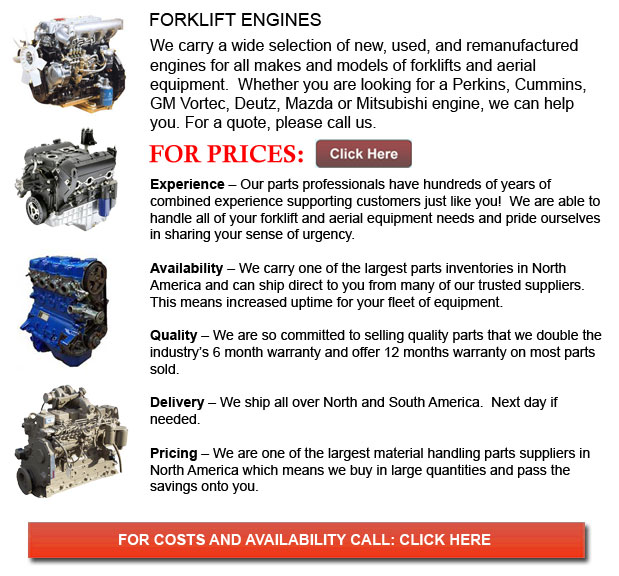

Engines for Forklifts - An engine, likewise referred to as a motor, is a tool which changes energy into useful mechanical motion. Motors which transform heat energy into motion are known as engines. Engines are available in several kinds like for instance internal and external combustion. An internal combustion engine typically burns a fuel along with air and the resulting hot gases are utilized for generating power. Steam engines are an illustration of external combustion engines. They use heat so as to produce motion together with a separate working fluid.
To be able to produce a mechanical motion via various electromagnetic fields, the electric motor needs to take and produce electrical energy. This particular type of engine is extremely common. Other types of engine could function utilizing non-combustive chemical reactions and some will make use of springs and function by elastic energy. Pneumatic motors function through compressed air. There are different designs based on the application required.
ICEs or Internal combustion engines
Internal combustion occurs when the combustion of the fuel combines together with an oxidizer in the combustion chamber. Inside the IC engine, higher temperatures will result in direct force to certain engine components such as the turbine blades, nozzles or pistons. This particular force generates useful mechanical energy by way of moving the part over a distance. Normally, an ICE has intermittent combustion as seen in the popular 2- and 4-stroke piston motors and the Wankel rotary motor. Most rocket engines, jet engines and gas turbines fall into a second class of internal combustion engines known as continuous combustion, that occurs on the same previous principal described.
Steam engines or Stirling external combustion engines very much vary from internal combustion engines. The external combustion engine, where energy is to be delivered to a working fluid like liquid sodium, pressurized water, hot water or air that is heated in a boiler of some type. The working fluid is not combined with, consisting of or contaminated by burning products.
A range of designs of ICEs have been developed and are now available with numerous strengths and weaknesses. When powered by an energy dense fuel, the internal combustion engine produces an effective power-to-weight ratio. Although ICEs have been successful in numerous stationary applications, their real strength lies in mobile utilization. Internal combustion engines control the power supply utilized for vehicles like for instance boats, aircrafts and cars. Some hand-held power tools utilize either ICE or battery power devices.
External combustion engines
An external combustion engine uses a heat engine wherein a working fluid, such as steam in steam engine or gas in a Stirling engine, is heated by combustion of an external source. This combustion takes place via a heat exchanger or through the engine wall. The fluid expands and acts upon the engine mechanism which produces motion. Afterwards, the fluid is cooled, and either compressed and used again or discarded, and cool fluid is pulled in.
Burning fuel together with the aid of an oxidizer to supply the heat is referred to as "combustion." External thermal engines can be of similar application and configuration but utilize a heat supply from sources such as exothermic, geothermal, solar or nuclear reactions not involving combustion.
Working fluid can be of any composition, even if gas is the most common working fluid. Every so often a single-phase liquid is sometimes used. In Organic Rankine Cycle or in the case of the steam engine, the working fluid adjusts phases between gas and liquid.
Click to Download the PDF
Forklift Parts





TOLL FREE: 1-888-695-7994
forkliftpartsprinceedwardisland.com
Email Us
About Us